Review Article | | Peer-Reviewed

Trihalomethane Formation in Zanzibar Groundwater: Environmental Drivers, Hydrochemical Controls, and Disinfection Practices

Received: 20 July 2026     Accepted: 17 August 2026     Published: 8 September 2026
Views:       Downloads:
Abstract

Trihalomethanes (THMs) are regulated disinfection by-products generated when chlorine reacts with natural organic matter and other reactive precursors in water. Their formation and speciation depend on hydrochemical conditions, halide availability, climate, and operational disinfection practices. This review examines the interacting factors that may control THM formation in Zanzibar groundwater, a tropical coastal aquifer system affected by seawater intrusion, sanitation-related pollution, agricultural activities, high temperatures, and seasonal variability. Peer-reviewed studies published from 2010 to 2025 were synthesized thematically, with emphasis on seawater intrusion, organic matter and nutrient pollution, climate variability, water hardness and inorganic chemistry, and local chlorination practices. The evidence indicates that bromide enrichment from saline mixing can shift THM speciation toward more toxic brominated compounds, while natural and algal organic matter provide reactive carbon precursors. Warm conditions accelerate halogenation reactions, and carbonate alkalinity and hardness stabilize the chemical environment in which chlorine reacts with organic matter. Inconsistent chlorine dosing, limited monitoring, and inadequate precursor removal may further increase disinfection by-product risks. The review identifies major local gaps, particularly the limited routine measurement of bromide, THMs, and organic-matter reactivity. It concludes that Zanzibar requires hydrochemically informed monitoring, improved source protection, precursor-removal measures, and adaptive disinfection strategies that account for spatial and seasonal water-quality variability while maintaining effective microbial control.

Published in Science Journal of Chemistry (Volume 14, Issue 4)
DOI 10.11648/j.sjc.20261404.11
Page(s) 118-129
Creative Commons

This is an Open Access article, distributed under the terms of the Creative Commons Attribution 4.0 International License (http://creativecommons.org/licenses/by/4.0/), which permits unrestricted use, distribution and reproduction in any medium or format, provided the original work is properly cited.

Copyright

Copyright © The Author(s), 2026. Published by Science Publishing Group

Keywords

Trihalomethanes, Disinfection By-products, Groundwater Quality, Chlorination, Zanzibar, Coastal Aquifers

1. Introduction
Trihalomethanes (THMs) are a major class of disinfection by-products (DBPs) formed when chlorine-based disinfectants react with natural organic matter (NOM) in water . Their occurrence in drinking water systems has raised global concern due to established associations with carcinogenicity, reproductive effects, and organ toxicity . The four principal THM species, chloroform (CHCl3), bromodichloromethane (CHBrCl2), dibromochloromethane (CHBr2Cl), and bromoform (CHBr3), are commonly detected and regulated in drinking water systems worldwide .
The formation of THMs is governed by a complex interplay of physicochemical and operational factors, including disinfectant dose, pH, temperature, reaction time, halide concentration, and the composition and reactivity of NOM . Mechanistically, THMs are generated via electrophilic substitution and oxidative degradation pathways involving hypochlorous acid (HOCl) and, in bromide-rich environments, hypobromous acid (HOBr), which is more reactive toward organic precursors . Consequently, the presence of bromide significantly alters THM speciation toward more toxic brominated compounds .
Tropical coastal aquifers represent high-risk environments for THM formation due to the convergence of hydrochemical and climatic factors. Seawater intrusion introduces halides such as bromide and iodide, while elevated temperatures enhance reaction kinetics, and seasonal variability alters NOM composition and concentration . These conditions are particularly pronounced in small island systems, where shallow aquifers are highly vulnerable to contamination and salinization .
Zanzibar, an archipelago in the Indian Ocean, relies predominantly on groundwater for domestic and economic activities . However, groundwater quality is increasingly compromised by seawater intrusion, agricultural runoff, inadequate sanitation, and climate variability . While chlorination is widely promoted to ensure microbial safety, limited monitoring and inconsistent application practices raise concerns regarding unintended THM formation under these hydrochemical conditions.
Despite growing global research on THM formation, there remains a lack of localized synthesis addressing the combined influence of environmental drivers and operational practices in Zanzibar groundwater systems. This review aims to bridge this gap by critically examining the mechanistic pathways and contextual factors influencing THM formation, with particular emphasis on seawater intrusion, organic pollution, climate variability, inorganic chemistry, and disinfection practices. The study further identifies research gaps and proposes adaptive strategies for integrating THM risk management into Zanzibar’s water safety framework. The synthesis shows that bromide enrichment, reactive organic precursors, warm temperatures, buffering chemistry, and poorly controlled chlorination interact to increase both THM formation and bromination.
1.1. Review Scope
This review used a systematic thematic approach to synthesize literature on THM formation in tropical coastal groundwater, with specific emphasis on Zanzibar. Peer-reviewed studies published from 2010 to 2025 were identified through Scopus, ScienceDirect, and Web of Science using combinations of the terms “trihalomethane”, “bromide”, “natural organic matter”, “chlorination”, “coastal groundwater”, and "Zanzibar groundwater”. Studies were retained when they addressed environmental or chemical controls on THM formation, provided mechanistic insight, or reported groundwater-quality conditions relevant to tropical or coastal aquifers. Evidence was synthesized around five themes: seawater intrusion; organic matter and nutrient pollution; climate variability and elevated temperature; water hardness and inorganic chemistry; and local disinfection practices. Supplementary information from the Zanzibar Water Authority and the Zanzibar Water Investment Programme (2022–2027) was used to contextualize gaps in local monitoring and treatment.
1.2. Guiding Questions
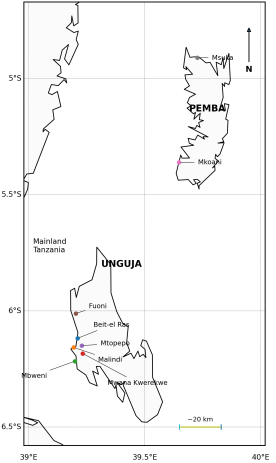
The review was guided by three questions: (1) how do seawater intrusion and halide enrichment influence THM formation and speciation; (2) how do organic pollution, climate variability, and inorganic water chemistry modify precursor availability and reaction conditions; and (3) how do local chlorination practices interact with these hydrochemical conditions, and what monitoring and management gaps remain? Figure 1 locates Zanzibar and selected groundwater study locations represented in the reviewed evidence.
Figure 1. Location of Zanzibar (Unguja and Pemba Islands) and selected groundwater study locations discussed in the reviewed literature. Locations are shown for spatial orientation and are approximate.
2. Evidence Synthesis and Critical Discussion
2.1. Seawater Intrusion
Seawater intrusion is a critical hydrogeological process in coastal aquifers, occurring when saline water encroaches into freshwater systems due to groundwater over-abstraction, reduced recharge, or sea-level rise . This process alters groundwater chemistry by increasing salinity and introducing elevated concentrations of major ions, including chloride (Cl), sodium (Na), and magnesium (Mg2⁺), as well as halides such as bromide (Br) and iodide (I). These halides play a pivotal role in the formation of disinfection by-products (DBPs), particularly in chlorinated drinking water systems .
Among these, bromide is particularly important due to its strong influence on THM speciation. During chlorination, hypochlorous acid (HOCl) rapidly oxidizes bromide to hypobromous acid (HOBr), a more reactive halogenating agent . HOBr preferentially reacts with electron-rich moieties in natural organic matter (NOM), leading to increased formation of brominated THMs such as bromodichloromethane and bromoform, which are generally more cytotoxic and genotoxic than their chlorinated counterparts . Consequently, even relatively low bromide concentrations can significantly shift DBP speciation and increase overall toxicity .
Beyond halide chemistry, seawater intrusion increases the ionic strength of groundwater, which can influence NOM structure and reactivity . Elevated ionic strength reduces electrostatic repulsion between NOM molecules, thereby enhancing aggregation and exposing reactive functional groups, such as aromatic and phenolic sites, to halogenation reactions . This process facilitates both electrophilic substitution and oxidative degradation pathways, thereby increasing THM formation potential .
Zanzibar's hydrogeological setting makes it particularly vulnerable to seawater intrusion. The island's aquifers are predominantly shallow and composed of highly permeable coral rag formations, which allow rapid movement of saline water through fractures and dissolution features . Increasing groundwater abstraction driven by population growth and tourism further disrupts the freshwater-seawater equilibrium, promoting inland migration of saline water .
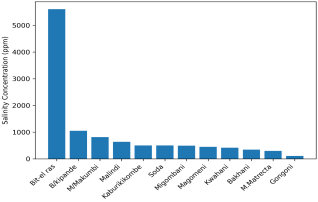
Hydrochemical data from boreholes across Zanzibar (Table 1) provide clear evidence of ongoing seawater intrusion. Elevated electrical conductivity, total dissolved solids, and chloride concentrations have been reported in multiple locations, particularly in coastal and urban areas such as Beit-el Ras, Gongoni, and Mbweni . These indicators not only reflect salinity intrusion but also indicate the presence of bromide, which is rarely directly monitored but is strongly correlated with chloride in coastal systems. Beyond the typical indicators of intrusion, Mato reported direct evidence of salinity in boreholes across Zanzibar Island, particularly in coastal wards such as Beit-el-Ras, Mbweni, Gongoni, and Malindi (Figure 2). This salinity reflects the mixing of seawater with freshwater, confirming that intrusion is not only incipient but already affecting water quality in localized aquifers.
Table 1. Hydrochemical indicators of seawater intrusion and implications for THM formation in Zanzibar groundwater.

Location

EC (µS/cm)

TDS (mg/L)

Chloride (mg/L)

Intrusion Level

THM Formation Implication

Reference

Gongoni

2080

1039

1040

Moderate

Elevated bromide → increased THM precursors

Beit-el Ras

8360

4889

4460

Severe

High brominated THM formation potential

Malindi

1520

754

500

Low-Moderate

Moderate DBP formation risk

Mkoani

4430

2510

1150

Moderate-High

Enhanced halogen substitution reactions

Msuka

1751

901

711

Moderate

Bromide-driven THM shift likely

Mbweni

2368

1539

260

Low-Moderate

Potential THM formation under chlorination

Despite this situation, routine monitoring of bromide and THMs is currently limited in Zanzibar, hindering effective prediction and management of DBP risks. Critically, existing water treatment practices in Zanzibar do not adequately account for spatial variability in salinity and halide concentrations. Uniform chlorination strategies applied across boreholes with differing hydrochemical conditions may inadvertently increase THM formation in high-risk areas. This highlights the need for adaptive disinfection approaches that account for bromide levels, optimize chlorine dosing, and incorporate pre-treatment or alternative disinfection strategies when necessary. Overall, seawater intrusion represents a key environmental driver that not only degrades groundwater quality but also fundamentally alters the chemical pathways governing THM formation. Addressing this issue requires integrated management approaches that combine hydrogeological monitoring, chemical risk assessment, and adaptive water treatment strategies tailored to coastal aquifer conditions.
Figure 2. Spatial distribution of salinity in selected Unguja locations.
2.2. Organic Matter and Nutrient Pollution
The presence, composition, and reactivity of organic matter in groundwater are primary determinants of trihalomethane (THM) formation during chlorination. Organic matter is commonly characterized using chemical oxygen demand (COD), dissolved organic carbon (DOC), and total organic carbon (TOC), whereas dissolved oxygen (DO) is better interpreted as a complementary indicator of aeration and redox conditions rather than as a direct measure of organic matter . Together, these parameters help describe the quantity and transformation state of potential disinfection by-product precursors.
Natural organic matter originates from the decomposition of plant material, soil organic carbon, and microbial biomass, and is characterized by a heterogeneous mixture of humic substances, fulvic acids, and low-molecular-weight organic compounds . The reactivity of NOM towards chlorine is strongly dependent on its structural characteristics, particularly aromaticity and the presence of electron-rich functional groups such as phenolic and activated carbon sites. These functional groups readily undergo electrophilic substitution with hypochlorous acid (HOCl), forming halogenated intermediates that subsequently decompose into THMs . In addition to terrestrial NOM, algal organic matter (AOM) plays a critical role in nutrient-enriched systems. AOM is typically more hydrophilic and contains higher proportions of proteins, amino acids, and polysaccharides, which exhibit enhanced reactivity toward both HOCl and hypobromous acid (HOBr) . Consequently, AOM has been shown to produce higher yields of brominated and nitrogenous DBPs compared to NOM, particularly in bromide-rich environments characteristic of coastal aquifers .
The mechanistic pathways of THM formation from organic matter involve two dominant processes: electrophilic substitution and oxidative degradation. In the substitution pathway, HOCl reacts with activated aromatic structures in NOM, leading to progressive halogenation and cleavage of carbon bonds . In parallel, oxidative degradation pathways involve the breakdown of carbonyl and carboxylic groups into smaller halogenated intermediates, such as trihaloacetaldehydes and haloacetic acids, which can further decompose into THMs . The relative contribution of these pathways depends on NOM composition, chlorine dose, and environmental conditions such as pH and temperature .
In Zanzibar, groundwater systems are increasingly affected by organic and nutrient pollution arising from both natural and anthropogenic sources . The widespread use of onsite sanitation systems, including pit latrines and septic tanks, contributes to the infiltration of organic-rich leachate into shallow aquifers, increasing dissolved organic carbon (DOC) and enhancing the availability of THM precursors . Agricultural activities also represent a significant source of nutrient loading, particularly nitrogen and phosphorus from fertilizer runoff (Table 2) . These nutrients stimulate algal growth in recharge zones and surface-connected groundwater systems. Upon decay, algal biomass releases AOM, which is highly reactive during chlorination and can substantially increase THM formation potential . This interaction between nutrient enrichment and organic matter production highlights a critical indirect pathway through which agricultural practices influence DBP formation .
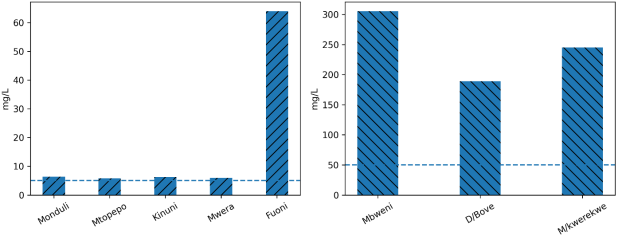
Reported DO and COD values vary substantially among the Zanzibar groundwater locations summarized in Figure 3. This variability likely reflects differences in recharge and aeration, groundwater residence time, organic inputs from sanitation and runoff, and local redox conditions . Rapidly recharged or well-aerated shallow groundwater may retain relatively higher DO, whereas groundwater receiving greater biodegradable organic inputs may experience stronger oxygen consumption. The exceptionally high DO value reported for Fuoni should therefore be interpreted cautiously because the figure synthesizes values reported by different source studies and may include differences in sampling time, field conditions, and analytical procedures. COD also varies spatially; higher COD indicates a greater oxidizable organic-matter load and, consequently, a larger pool of material that may contribute to THM precursor formation. These contrasts demonstrate that precursor availability and redox conditions are spatially heterogeneous across Zanzibar and should be evaluated using multiple water-quality indicators rather than a single parameter.
Despite THM risks, there is limited characterization of NOM composition and reactivity in Zanzibar groundwater systems. Advanced analytical techniques, such as UV254 absorbance, specific ultraviolet absorbance (SUVA), and excitation-emission matrix (EEM) fluorescence spectroscopy, are widely used to assess NOM quality and predict THM formation potential in other regions. The absence of such analyses in Zanzibar represents a significant knowledge gap that constrains effective risk assessment and treatment optimization. To mitigate THM formation, source control strategies are essential, including improvements in sanitation infrastructure, regulation of agricultural runoff, and protection of recharge zones. In parallel, treatment approaches should incorporate precursor-removal processes, such as coagulation, adsorption, or membrane filtration, prior to chlorination. Integrating these strategies into Zanzibar's water management framework will be critical for reducing organic precursor loads and minimizing DBP formation while maintaining effective disinfection.
Figure 3. Variation of organic-matter indicators in Zanzibar groundwater: (a) dissolved oxygen and (b) chemical oxygen demand.
Table 2. Linkage between environmental indicators and THM formation mechanisms in Zanzibar groundwater.

Indicator

Source in Zanzibar

Chemical Role

Mechanistic Effect on THM Formation

Key Reference

COD

Sewage, runoff

Organic load

Provides reactive carbon for halogenation

DO

Recharge/aeration and organic-matter degradation

Redox indicator

Indicates spatial redox conditions that in fluence precursor transformation; not a direct THM precursor

Nutrients (N, P)

Agriculture, sanitation

AOM production

Enhances formation of reactive organic precursors

NOM/AOM

Soil, vegetation, algal biomass

Primary precursor

Undergoes substitution and oxidation reactions

2.3. Climate Variability and Elevated Temperature Effects on THM Formation
Climate variability plays a significant role in shaping groundwater chemistry and, consequently, the formation of trihalomethanes (THMs) in tropical coastal aquifers. In regions such as Zanzibar, characterized by high ambient temperatures and pronounced seasonal rainfall patterns, climate-driven changes influence both the availability of organic precursors and the kinetics of disinfection by-product (DBP) formation .
Temperature is a key factor governing THM formation because it directly affects reaction kinetics. Elevated temperatures generally accelerate electrophilic substitution and oxidative degradation reactions between chlorine species and natural organic matter, which can increase THM formation rates and yields . Chlorine speciation between hypochlorous acid (HOCl) and hypochlorite (OCl−), however, is controlled primarily by pH; temperature modifies the equilibrium only secondarily. Thus, the principal effect of the persistently warm tropical conditions in Zanzibar is faster reaction kinetics and more rapid transformation of reactive organic precursors, while the relative abundance of HOCl and OCl− remains strongly pH-dependent .
Seasonal variability further modulates THM formation through its influence on both salinity and organic matter dynamics . During wet seasons, increased recharge introduces fresh, low-molecular-weight NOM derived from soil leaching and surface runoff. This NOM is typically more hydrophilic and contains reactive functional groups, such as carboxylic and phenolic moieties, which are readily halogenated during chlorination, thereby increasing THM formation potential . In contrast, dry seasons are often associated with reduced recharge, enhanced evaporation, and intensified seawater intrusion, leading to elevated concentrations of bromide and dissolved salts .
This seasonal dichotomy creates two distinct but complementary pathways for THM formation. During wet periods, THM production is primarily driven by increased availability and reactivity of organic precursors, leading to higher overall THM yields . Conversely, in dry periods, bromide enrichment promotes the formation of hypobromous acid (HOBr), which enhances halogen substitution reactions and shifts THM speciation toward more toxic brominated compounds . As a result, while total THM concentrations may vary seasonally, the toxicity profile of THMs is often greater during dry seasons due to increased bromination.
In Zanzibar, these processes are strongly influenced by the bimodal rainfall pattern, consisting of the long rains (Masika) and short rains (Vuli), interspersed with extended dry periods . Climate variability and elevated temperatures significantly influence groundwater quality and trihalomethane (THM) formation in Zanzibar. A seasonal study by demonstrated that during the rainy season, increased recharge enhances the infiltration of organic matter into aquifers, raising dissolved organic carbon (DOC) and THM precursor availability. Similar observations have been reported in Unguja coastal aquifers, where seasonal changes affect key physicochemical parameters, including salinity and organic-related indicators . In contrast, dry-season conditions are associated with increased salinity and seawater intrusion, particularly in coastal zones, leading to elevated bromide concentrations . These elevated bromide levels play a critical role in THM formation by reacting with chlorine to form hypobromous acid (HOBr), a more reactive species than hypochlorous acid (HOCl). HOBr preferentially reacts with natural organic matter (NOM), promoting the formation of brominated THMs.
Currently, water treatment practices in Zanzibar do not account for seasonal variability in groundwater quality. Chlorination is typically applied uniformly throughout the year, without adjustment for changes in organic matter, bromide levels, or temperature. This lack of adaptive management may result in suboptimal disinfection during wet seasons and increased DBP formation during dry periods, particularly in bromide-rich aquifers. From a risk management perspective, integrating climate variability into water safety planning is essential. Monitoring programs should incorporate seasonal data on temperature, salinity, and indicators of organic matter to enable predictive assessment of THM formation potential. Adaptive disinfection strategies, including seasonal adjustment of chlorine dose, optimization of contact time, and consideration of alternative disinfectants such as chloramines or ultraviolet (UV) treatment, may significantly reduce DBP formation while maintaining microbial safety. The combined effects of elevated temperature, seasonal organic matter inputs, and bromide enrichment create a dual pathway that enhances both the quantity and toxicity of THMs. Addressing these challenges requires a shift from static to climate-responsive water treatment strategies that reflect the temporal variability of groundwater quality.
2.4. Water Hardness and Inorganic Chemistry
Water hardness and inorganic chemistry play a fundamental role in regulating trihalomethane (THM) formation by influencing pH, buffering capacity, and chlorine speciation . Hardness in groundwater is primarily governed by the presence of divalent cations, particularly calcium (Ca2⁺) and magnesium (Mg2⁺), while carbonate (CO32⁻) and bicarbonate (HCO3⁻) ions contribute to alkalinity and pH stabilization . These parameters collectively define the chemical environment in which chlorination reactions occur.
A key link between inorganic chemistry and THM formation lies in chlorine speciation, which is strongly pH-dependent. When chlorine is added to water, it exists mainly as HOCl and OCl−. At the lower end of the typical drinking-water pH range, HOCl constitutes a larger fraction, whereas OCl− becomes increasingly important as pH rises. Because HOCl is the more reactive disinfecting species, changes in pH alter the kinetics and pathways of chlorine reactions with natural organic matter . Accordingly, alkalinity is important mainly because it buffers pH and can maintain relatively stable reaction conditions during chlorination; it should not be interpreted as making HOCl predominant throughout the entire pH 7–8.5 range.
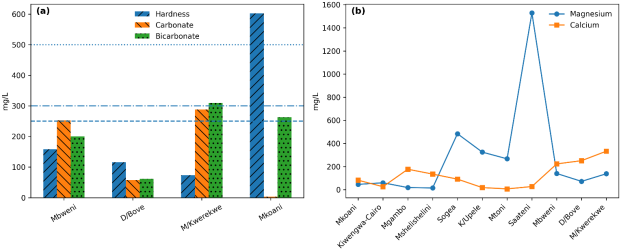
The spatial variability of hardness, carbonate, and bicarbonate shown in Figure 4a reflects site-specific differences in aquifer mineralogy, carbonate dissolution, seawater mixing, recharge, and groundwater residence time. Higher bicarbonate at M/Kwerekwe (310 mg/L) and Mkoani (263 mg/L), together with elevated carbonate reported at Mbweni (253 mg/L) and M/Kwerekwe (288 mg/L), indicates substantial buffering at these locations. Such differences can maintain distinct pH and ionic strength conditions among boreholes and thereby influence chlorine reactivity and THM-forming pathways. The observed spatial variation therefore provides a hydrochemical explanation for why a uniform chlorination practice may not produce the same disinfection-by-product response at every groundwater source.
The markedly high hardness reported for Mkoani (602.5 mg/L) compared with locations such as M/Kwerekwe (73.5 mg/L) further illustrates this heterogeneity (Figure 4b) . The higher value at Mkoani is consistent with stronger mineral–water interaction and possible saline influence, both of which can increase the abundance of hardness-forming Ca2+ and Mg2+ ions. Divalent cations can alter natural organic matter conformation, aggregation, and complexation, thereby modifying the accessibility of reactive functional groups to HOCl and HOBr . Consequently, hardness should be viewed as an indirect hydrochemical modifier of THM formation rather than as a THM precursor itself. Its effect will depend on co-occurring pH, alkalinity, bromide, and organic-matter characteristics.
Given these interactions, continuous monitoring of pH, hardness, and alkalinity is essential for optimizing disinfection while minimizing THM risks. Treatment strategies such as pH adjustment or softening can suppress THM-forming conditions by shifting chlorine speciation or reducing NOM reactivity. Integrating hydrochemical monitoring into local water management practices will be critical for balancing effective disinfection with public health protection.
Figure 4. Spatial variation of (a) hardness, carbonate, and bicarbonate and (b) magnesium and calcium concentrations in Zanzibar groundwater.
2.5. Disinfection Practices
Chlorination remains the most widely applied disinfection method in drinking water treatment due to its proven effectiveness in inactivating pathogenic microorganisms and providing residual protection within distribution systems . However, chlorine reacts with NOM and other precursors to form disinfection by-products, including trihalomethanes .
Upon dissolution in water, chlorine forms hypochlorous acid (HOCl), which acts as a principal reactive disinfecting species. HOCl reacts with electron-rich functional groups in natural organic matter, including aromatic and phenolic structures, producing halogenated intermediates that can subsequently degrade to THMs . Oxidative degradation pathways can also transform carbonyl- and carboxyl-containing compounds into intermediates, including trihaloacetaldehydes and haloacetic acids, some of which may undergo further reactions that contribute to THM formation .
In Zanzibar, chlorination is widely used as the primary method to ensure the microbial safety of drinking water systems, particularly as a public health response to recurrent outbreaks of waterborne diseases such as cholera. Several groundwater studies in Zanzibar consistently report significant microbial contamination in groundwater sources, with elevated coliform counts frequently exceeding WHO drinking water standards (Table 3). These values far exceed the World Health Organization guideline of zero coliforms in drinking water, confirming that many groundwater sources in Zanzibar are vulnerable to microbial contamination. The study further demonstrated that contamination levels are strongly influenced by the proximity of pit latrines to water sources, particularly in densely populated areas where sanitation facilities are poorly regulated . The presence of these microorganisms underscores the potential health risks of untreated groundwater and the need to disinfect it prior to consumption .
Table 3. Microbial contamination levels in groundwater sources in Zanzibar.

Study Area

Reference

Method

Microbial Indicator

Concentration Range / Value

WHO Compliance

Pemba Island

Membrane filtration

Total coliform

2-93 CFU/100 mL

Above WHO (0 CFU/100 mL)

Pemba Island

Membrane filtration

Fecal coliform

0-32 CFU/100 mL

Above WHO (0 CFU/100 mL)

Unguja Island

MPN

Total coliform

31.2-688 CFU/100 mL

Above WHO (0 CFU/100 mL)

Unguja Island

MPN

Fecal coliform (E. coli)

124-667 CFU/100 mL

Above WHO (0 CFU/100 mL)

Consequently, chlorination is commonly practiced at both household and community levels. However, this process is often carried out without adequate technical guidance, including proper dosing, sufficient contact time, and essential pre-treatment steps such as filtration to remove natural organic matter (NOM). In Zanzibar, chlorine is also often distributed to communities without sufficient instruction on appropriate use, leading to inconsistent and sometimes excessive application. Under these conditions, untreated NOM and uncontrolled chlorination can significantly increase trihalomethane (THM) formation. This not only compromises treatment efficiency but also increases the potential health risks associated with exposure to disinfection by-products, highlighting the need for improved public awareness and better water treatment practices in Zanzibar. Current disinfection practices in Zanzibar are largely uniform and do not account for variations in water chemistry, seasonal changes, or site-specific risks. This lack of adaptive management may lead to both under-disinfection in some cases and excessive DBP formation in others. As such, there is a need to shift from generalized chlorination approaches to more targeted, optimized disinfection strategies.
In many cases, disinfection practices are a critical control point in THM formation in Zanzibar groundwater systems. While chlorination remains indispensable for protecting public health, its application must be carefully managed to balance microbial safety with chemical risk. Achieving this balance requires improved monitoring, optimized treatment processes, and context-specific management strategies tailored to Zanzibar's unique hydrochemical conditions.
2.6. Conceptual Pathway of THM Formation in the Zanzibar Groundwater System
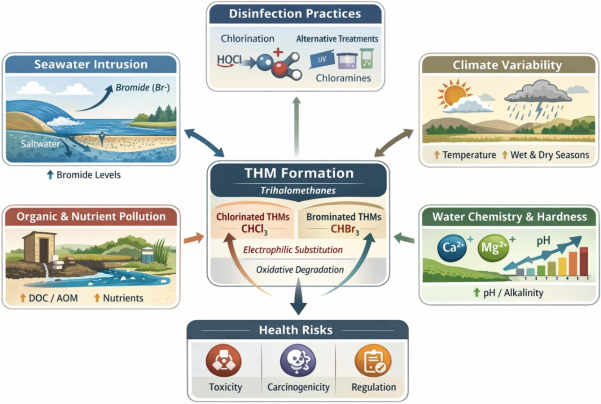
The conceptual pathway for THM formation in Zanzibar groundwater (Figure 5) highlights the interconnected environmental, chemical, and anthropogenic drivers that influence disinfection by-product formation. Seawater intrusion contributes to elevated bromide concentrations, which promote brominated THM formation during chlorination. Simultaneously, organic and nutrient pollution from pit latrines and agricultural activities increases dissolved organic carbon (DOC) and assimilable organic matter, providing essential precursors for THM formation.
Climate variability, including elevated temperatures and seasonal wet–dry cycles, further modulates these processes by influencing organic-matter inputs and salinity dynamics. In addition, hydrochemical conditions such as hardness and alkalinity influence pH, ionic strength, and chlorine speciation. Under these conditions, reactions among HOCl/HOBr, NOM, and halide ions proceed through electrophilic substitution and oxidative degradation pathways, resulting in the formation of both chlorinated and brominated THMs.
As shown in Figure 5, the combined influence of these factors ultimately contributes to potential health risks, including toxicity and carcinogenicity. This integrated framework demonstrates that THM formation in Zanzibar is driven by the interaction of multiple processes rather than a single factor, emphasizing the need for integrated water quality management strategies.
Figure 5. Integrated pathways of THM formation in the Zanzibar groundwater system.
3. Conclusions
This review demonstrates that THM formation potential in Zanzibar groundwater is governed by interacting environmental, hydrochemical, and operational factors. Seawater intrusion, nutrient and organic pollution, climate variability, and water chemistry collectively create conditions that can influence both THM formation and speciation. In particular, bromide enrichment and reactive organic matter can promote a shift toward brominated THMs when the groundwater is chlorinated.
Current disinfection practices, often characterized by limited monitoring and non-optimized chlorine application, further amplify these risks. The lack of routine assessment of THMs, bromide, and organic precursors represents a significant gap in Zanzibar's water management framework. Addressing these challenges requires integrating hydrochemical monitoring, adaptive disinfection strategies, and improved public awareness.
Future research should prioritize direct measurement of bromide and THM occurrence, detailed characterization of natural organic matter, and evaluation of locally appropriate treatment and disinfection strategies for tropical coastal aquifers. Context-specific water-safety planning that balances microbial protection with chemical risk will be essential for safe and sustainable groundwater use in Zanzibar.
Abbreviations

AOM

Algal Organic Matter

DBPs

Disinfection By-products

DO

Dissolved Oxygen

DOC

Dissolved Organic Carbon

EC

Electrical Conductivity

HOBr

Hypobromous Acid

HOCl

Hypochlorous Acid

NOM

Natural Organic Matter

TDS

Total Dissolved Solids

THMs

Trihalomethanes

TOC

Total Organic Carbon

UV

Ultraviolet

Acknowledgments
Mulhat Mohd Fasih gratefully acknowledges the NAMA Foundation for financial support provided through the International Institute of Islamic Thought-International Islamic University Malaysia (IIIT-IIUM) Sponsorship Program. The author also acknowledges International Islamic University Malaysia for providing an enabling academic environment for her doctoral studies and intellectual development.
Author Contributions
Mulhat Mohd Fasih: Conceptualization, Data curation, Formal Analysis, Investigation, Methodology, Project administration, Resources, Visualization, Writing – original draft, Writing – review & editing
Funding
This work was supported by the NAMA Foundation through the International Institute of Islamic Thought-International Islamic University Malaysia (IIIT-IIUM) Sponsorship Program.
Conflicts of Interest
The author declares no conflicts of interest.
References
[1] Badaró, J. P. M., Campos, V. P., da Rocha, F. O. C., Santos, C. L. Multivariate analysis of the distribution and formation of trihalomethanes in treated water for human consumption. Food Chemistry. 2021, 365, 130469.
[2] Mahato, J. K., Gupta, S. K. Guideline Development History of Trihalomethanes in Drinking Water – A Review in Indian Perspective. International Journal of Environmental & Earth Sciences. 2020, 1(1).
[3] Richardson, S. D., Ternes, T. A. Water analysis: emerging contaminants and current issues. Analytical Chemistry. 2021, 94(1), 382-416.
[4] Evlampidou, I., Font-Ribera, L., Rojas-Rueda, D., Gracia-Lavedan, E., Costet, N., Pearce, N., Vineis, P., Jaakkola, J. J., Delloye, F., Makris, K. C. Trihalomethanes in drinking water and bladder cancer burden in the European Union. Environmental Health Perspectives. 2020, 128(1), 017001.
[5] Jeong, C. H., Machek, E. J., Shakeri, M., Duirk, S. E., Ternes, T. A., Richardson, S. D., Wagner, E. D., Plewa, M. J. The impact of iodinated X-ray contrast agents on formation and toxicity of disinfection by-products in drinking water. Journal of Environmental Sciences. 2017, 58, 173-182.
[6] Aleid, M. K., Alharbi, K. N., Aljufareen, M. A., Aloliwi, A. S., Almutairi, A. K., Alsaif, R. S., Alshayeb, N. K., Almoiqli, M. S. Evaluation of water quality via determination of trihalomethanes in water distribution networks of Riyadh city in Kingdom of Saudi Arabia. Arabian Journal of Chemistry. 2024, 17(1), 105431.
[7] Krasner, S. W., Kostopoulou, M., Toledano, M. B., Wright, J., Patelarou, E., Kogevinas, M., Villanueva, C. M., Carrasco‐Turigas, G., Marina, L. S., Fernández‐Somoano, A. Occurrence of DBPs in drinking water of European regions for epidemiology studies. Journal‐American Water Works Association. 2016, 108(10), E501-E512.
[8] Bond, T., Huang, J., Templeton, M. R., Graham, N. Occurrence and control of nitrogenous disinfection by-products in drinking water – a review. Water Research. 2011, 45(15), 4341-4354.
[9] Clayton, G. E., Thorn, R. M., Reynolds, D. M. Comparison of trihalomethane formation using chlorine-based disinfectants within a model system; applications within point-of-use drinking water treatment. Frontiers in Environmental Science. 2019, 7, 35.
[10] Tak, S., Vellanki, B. P. Natural organic matter as precursor to disinfection byproducts and its removal using conventional and advanced processes: state of the art review. Journal of Water and Health. 2018, 16(5), 681-703.
[11] Parveen, N., Goel, S. Effect of seawater intrusion on the formation of chlorinated and brominated trihalomethanes in coastal groundwater. Water. 2022, 14(21), 3579.
[12] Chowdhury, S. Effects of seawater intrusion on the formation of disinfection byproducts in drinking water. Science of the Total Environment. 2022, 827, 154398.
[13] Kolb, C., Pozzi, M., Samaras, C., VanBriesen, J. M. Climate change impacts on bromide, trihalomethane formation, and health risks at coastal groundwater utilities. ASCE-ASME Journal of Risk and Uncertainty in Engineering Systems, Part A: Civil Engineering. 2017, 3(3), 04017006.
[14] Gunasekera, V. THM Formation in Surface Waters. Doctoral thesis. Sydney, Australia: Western Sydney University; 2018. Western Sydney University, Sydney, Australia.
[15] Okema, C. M. Zanzibar in Tanzania. In Practising Self-Government: A Comparative Study of Autonomous Regions; 2021, 11(13) pp. 171-194.
[16] Abdul, A. J. M., Lim, H., Miza, A. K. Characterization of Ground Water Quality in Southern and Northern Region of Zanzibar Island. Journal of New Developments in Chemistry. 2021, 3(3), 22-31.
[17] Ali, R. M. Ground Water Quality Dynamics During Wet and Dry Episodes in Urban West Region of Zanzibar Island. Thesis, State University of Zanzibar, Zanzibar, Tanzania, 2019.
[18] Bakari, S. S., Suleiman, Z. N., Ali, H. R., Kai, K. H. Impacts of Pit Latrines on Groundwater Quality in Squatter Settlements in Zanzibar. Earth & Environmental Science Research & Reviews. 2023, 6(3), 487-496.
[19] Masuod, S. H., Makoba, E. E., Mariki, E. E., Mwalilino, J. The Impact of Seawater Intrusions in Groundwater Quality for Drinking and Irrigation Purposes in Mkoani Aquifers, Pemba Island Zanzibar. Pemba Island Zanzibar. Heliyon (2024)3(2).
[20] Mato, R. Groundwater quality degradation due to salt water intrusion in Zanzibar Municipality. African Journal of Environmental Science and Technology. 2015, 9(9), 734-740.
[21] Mohamed, A., Kitwana, T. M. Water quality from hand-dug wells and boreholes in Micheweni District of Pemba Island, Zanzibar. Journal of Analytical & Pharmaceutical Research. 2018, 7(6), 674-678.
[22] Mohammed, L. R., Kai, K. H., Kijazi, A. L., Bakar, S. S., Khamis, S. A. The influence of weather and climate variability on groundwater quality in Zanzibar. Atmospheric and Climate Sciences. 2022, 12(4), 613-634.
[23] Mwevura, H., Hassan, H. S. Levels and Distribution of Pesticide Residues in Water and Soil from the Hydromorphic Rice Valleys of Pemba Island-Zanzibar, Tanzania. International Journal of Research in Environmental Science. 2018, 4(1), 83-92.
[24] Werner, A. D., Bakker, M., Post, V. E. A., Vandenbohede, A., Lu, C., Ataie-Ashtiani, B., Simmons, C. T., Barry, D. A. Seawater intrusion processes, investigation and management: Recent advances and future challenges. Advances in Water Resources. 2013, 51, 3-26.
[25] Kimura, S. Y., Ortega-Hernandez, A. Formation mechanisms of disinfection byproducts: Recent developments. Current Opinion in Environmental Science & Health. 2019, 7, 61-68.
[26] Tan, J., Allard, S., Gruchlik, Y., McDonald, S., Joll, C., Heitz, A. Impact of bromide on halogen incorporation into organic moieties in chlorinated drinking water treatment and distribution systems. Science of the Total Environment. 2016, 541, 1572-1580.
[27] Richardson, S. D., Kimura, S. Y. Water analysis: emerging contaminants and current issues. Analytical Chemistry. 2019, 92(1), 473-505.
[28] Wawryk, N., Wu, D., Zhou, A., Moe, B., Li, X.-F. Disinfection: A trade-off between microbial and chemical risks. In A new paradigm for environmental chemistry and toxicology: From concepts to insights (pp. 211-228). Springer. 2019.
[29] Msika, B. J., Saka, J. D. K., Dulanya, Z. Spatial distribution, chemistry and subsurface temperatures of geothermal springs Nkhata bay, Malawi. African Journal of Environmental Science and Technology. 2014, 8(8), 464-475.
[30] Mythilee Priyanka, V., Maddamsetty, R., Yarramalle, S. Hydrochemical characterisation and identification of seawater intrusion in the Visakhapatnam coastal aquifer. Journal of Water and Health. 2023, 21(7), 915-924.
[31] Anthony, O. O., Ali, A. S., Hamad, H. S., Hamad, M. K., Juma, K. A. Hydro-geochemistry and health risks assessment of some groundwaters suitability for drinking within the urban region of Unguja Island, Zanzibar. International Journal of Life Science Research Archive. 2021, 1(1), 055-070.
[32] Aguilar-Torrejón, J. A., Balderas-Hernández, P., Roa-Morales, G., Barrera-Díaz, C. E., Rodríguez-Torres, I., Torres-Blancas, T. Relationship, importance, and development of analytical techniques: COD, BOD, and, TOC in water—An overview through time. SN Applied Sciences. 2023, 5(4), 118.
[33] Asadollahi, A., Sohrabifar, A., Fakhraei, H. Trihalomethane Formation from Soil-Derived Dissolved Organic Matter During Chlorination and Chloramination: A Case Study in Cedar Lake, Illinois. Geographies. 2025, 5(1), 15.
[34] Adityosulindro, S., Hartono, D. M., Moersidik, S. S. Analysis of Natural Organic Matter as Precursors of Trihalomethanes and Its Removal in Water Treatment Plant. EnvironmentAsia. 2024, 17(1). DOI 10.14456/ea.2024.9
[35] Matilainen, A., Gjessing, E. T., Lahtinen, T., Hed, L., Bhatnagar, A., Sillanpää, M. An overview of the methods used in the characterisation of natural organic matter (NOM) in relation to drinking water treatment. Chemosphere. 2011, 83(11), 1431-1442.
[36] O’Driscoll, C., McGillicuddy, E., Croot, P., Bartley, P., McMyler, J., Sheahan, J., Morrison, L. Tracing sources of natural organic matter, trihalomethanes and metals in groundwater from a karst region. Environmental Science and Pollution Research. 2020, 27, 12587-12600.
[37] Neil, C. W., Zhao, Y., Zhao, A., Neal, J., Meyer, M., Yang, Y. J. Trihalomethane precursor reactivity changes in drinking water treatment unit processes during a storm event. Water Supply. 2019, 19(7), 2098-2106.
[38] Bond, T., Goslan, E. H., Parsons, S. A., Jefferson, B. A critical review of trihalomethane and haloacetic acid formation from natural organic matter surrogates. Environmental Technology Reviews. 2012, 1(1), 93-113.
[39] Zheng, W., Chen, Y., Zhang, J., Peng, X., Xu, P., Niu, Y., Dong, B. Control of chlorination disinfection by-products in drinking water by combined nanofiltration process: A case study with trihalomethanes and haloacetic acids. Chemosphere. 2024, 358, 142121.
[40] Gan, W., Ge, Y., Zhong, Y., Yang, X. The reactions of chlorine dioxide with inorganic and organic compounds in water treatment: kinetics and mechanisms. Environmental Science: Water Research & Technology. 2020, 6(9), 2287-2312.
[41] Assefa, E., Jabasingh, A., Tadesse, A. M., Dessalegne, M., Mulugeta, E., Teju, E. Seasonal natural organic matter removal and implications for disinfection by-product formation at the Koka water treatment plant: Upper Awash, Ethiopia. Journal of Water and Health. 2024, 22(10), 1956-1971.
[42] Masoud, M. S., Ismail, A. M., El-Hoshy, M. M. Kinetics and thermodynamics of the formation of trihalomethanes. Applied Water Science. 2019, 9, 1-6.
[43] Von Gunten, U. Oxidation processes in water treatment: are we on track? Environmental Science & Technology. 2018, 52(9), 5062-5075.
[44] Li, W.-Y., Chen, Y., Wang, W.-L., Chen, Y.-L., Wu, Q.-Y. The Impact of Dissolved Organic Matter in Natural Receiving Systems on the Formation Potential and Toxicity of Disinfection By-products: Insights from Origins, Chemical Properties, and Transformations. Current Pollution Reports. 2025, 11(1), 29.
[45] Kaku, P. M., Haochen, Z., Murigi, P. N. Impact of Climate Change on Water Resource Management in Zanzibar. International Journal of Scientific and Research Publications. 2019, 9(3).
[46] Okafor, C. J., Othman, W. J., Haji, M. d. R., Mwevura, H. Seasonal assessment of quality of groundwater from private owned wells in Unguja island Zanzibar. International Journal of TROPICAL DISEASE & Health. 2021, 42(4), 30-45. hppt://doi.org/10.9734/IJTDH/2021/v42i430449
[47] Xue, R. Drinking Water Disinfection By-products: Detection, Formation and Precursor Removal. Ph. D. Thesis, Missouri University of Science and Technology, Rolla, MO, USA, 2017.
[48] Rohani-Ghadikolaei, K., Fourooghifard, H., Abdolalian, E., Moezzi, M., Zahedi, M. Water Quality Notes: Alkalinity and Hardness. Journal of Ornamental Aquatics. 2017, 4(3), 23-29.
[49] Shi, G., Wang, J., Yu, J. et al. The impact of increased water hardness on pollutant toxicity in freshwater aquatic organisms. Environ Monit Assess 197, 1131 (2025).
[50] Mohamed, A. A. J., Rahman, I. A. & Lim, L. H. Groundwater quality assessment in the urban-west region of Zanzibar Island. Environ Monit Assess 186, 6287–6300 (2014).
[51] Stefán, D., Balogh, J., Záray, G., Vargha, M. Comparison of disinfection by-product formation and distribution during breakpoint chlorination and chlorine-based disinfection in drinking water. Water. 2022, 14(9), 1372.
[52] World Health Organization. Guidelines for Drinking-water Quality, 4th ed., incorporating the first addendum. Geneva: World Health Organization; 2017.
[53] Arman, K., Pardakhti, A. R., Osoleddini, N., Leili, M. Cancer Risk Assessment from Multi-Exposure to Chloroform in Drinking Water of Ilam City, Iran. Avicenna Journal of Environmental Health Engineering. 2016, 3(1).
[54] Valiallahi, J., Yazdani, M. Evaluating groundwater quality by examining electrical conductivity, total dissolved solids, total hardness, and turbidity using geographic information systems (GIS®): a case study of selected wells in the Taleghan region, Iran. Applied Water Science. 2025, 15(3), 1-11.
[55] Aguilar-Santos, A. L., Siebe, C., Fuentes-García, R., Prado-Pano, B., Meza-González, J., Hernández-Quiroz, M., de Leon, C. P. Trihalomethanes (THMs) formation in chlorine-treated and-untreated wastewater and its horizontal and vertical distribution through the irrigation of agricultural fields. Water Supply. 2024, 24(11), 3744-3758.
[56] Al‐Omari, A., Muhammetoglu, A., Karadirek, E., Jiries, A., Batarseh, M., Topkaya, B., Soyupak, S. A review on formation and decay kinetics of trihalomethanes in water of different qualities. Clean-Soil, Air, Water. 2014, 42(12), 1687-1700
[57] Yuthawong, V., Thongnueaha, C., Phungsai, P. Formation of chlorinated disinfection by-products and fate of their precursors in individual processes of a conventional water treatment plant assessed using high-resolution mass spectrometry. Environmental Science: Water Research & Technology. 2024, 10(10), 2453-2465.
[58] Mohamed, A. A., Rahman, I. A., Lim, L. H., Muharram, H., Mabruk, M., Tanggah, F., Rahman, N. A. Assessment of groundwater quality parameters in northern region of Zanzibar Island. Journal of Chemical Engineering and Bioanalytical Chemistry. 2016, 1(1).
Cite This Article
  • APA Style

    Fasih, M. M. (2026). Trihalomethane Formation in Zanzibar Groundwater: Environmental Drivers, Hydrochemical Controls, and Disinfection Practices. Science Journal of Chemistry, 14(4), 118-129. https://doi.org/10.11648/j.sjc.20261404.11

    Copy | Download

    ACS Style

    Fasih, M. M. Trihalomethane Formation in Zanzibar Groundwater: Environmental Drivers, Hydrochemical Controls, and Disinfection Practices. Sci. J. Chem. 2026, 14(4), 118-129. doi: 10.11648/j.sjc.20261404.11

    Copy | Download

    AMA Style

    Fasih MM. Trihalomethane Formation in Zanzibar Groundwater: Environmental Drivers, Hydrochemical Controls, and Disinfection Practices. Sci J Chem. 2026;14(4):118-129. doi: 10.11648/j.sjc.20261404.11

    Copy | Download

  • @article{10.11648/j.sjc.20261404.11,
      author = {Mulhat Mohd Fasih},
      title = {Trihalomethane Formation in Zanzibar Groundwater: Environmental Drivers, Hydrochemical Controls, and Disinfection Practices},
      journal = {Science Journal of Chemistry},
      volume = {14},
      number = {4},
      pages = {118-129},
      doi = {10.11648/j.sjc.20261404.11},
      url = {https://doi.org/10.11648/j.sjc.20261404.11},
      eprint = {https://article.sciencepublishinggroup.com/pdf/10.11648.j.sjc.20261404.11},
      abstract = {Trihalomethanes (THMs) are regulated disinfection by-products generated when chlorine reacts with natural organic matter and other reactive precursors in water. Their formation and speciation depend on hydrochemical conditions, halide availability, climate, and operational disinfection practices. This review examines the interacting factors that may control THM formation in Zanzibar groundwater, a tropical coastal aquifer system affected by seawater intrusion, sanitation-related pollution, agricultural activities, high temperatures, and seasonal variability. Peer-reviewed studies published from 2010 to 2025 were synthesized thematically, with emphasis on seawater intrusion, organic matter and nutrient pollution, climate variability, water hardness and inorganic chemistry, and local chlorination practices. The evidence indicates that bromide enrichment from saline mixing can shift THM speciation toward more toxic brominated compounds, while natural and algal organic matter provide reactive carbon precursors. Warm conditions accelerate halogenation reactions, and carbonate alkalinity and hardness stabilize the chemical environment in which chlorine reacts with organic matter. Inconsistent chlorine dosing, limited monitoring, and inadequate precursor removal may further increase disinfection by-product risks. The review identifies major local gaps, particularly the limited routine measurement of bromide, THMs, and organic-matter reactivity. It concludes that Zanzibar requires hydrochemically informed monitoring, improved source protection, precursor-removal measures, and adaptive disinfection strategies that account for spatial and seasonal water-quality variability while maintaining effective microbial control.},
     year = {2026}
    }
    

    Copy | Download

  • TY  - JOUR
    T1  - Trihalomethane Formation in Zanzibar Groundwater: Environmental Drivers, Hydrochemical Controls, and Disinfection Practices
    AU  - Mulhat Mohd Fasih
    Y1  - 2026/09/08
    PY  - 2026
    N1  - https://doi.org/10.11648/j.sjc.20261404.11
    DO  - 10.11648/j.sjc.20261404.11
    T2  - Science Journal of Chemistry
    JF  - Science Journal of Chemistry
    JO  - Science Journal of Chemistry
    SP  - 118
    EP  - 129
    PB  - Science Publishing Group
    SN  - 2330-099X
    UR  - https://doi.org/10.11648/j.sjc.20261404.11
    AB  - Trihalomethanes (THMs) are regulated disinfection by-products generated when chlorine reacts with natural organic matter and other reactive precursors in water. Their formation and speciation depend on hydrochemical conditions, halide availability, climate, and operational disinfection practices. This review examines the interacting factors that may control THM formation in Zanzibar groundwater, a tropical coastal aquifer system affected by seawater intrusion, sanitation-related pollution, agricultural activities, high temperatures, and seasonal variability. Peer-reviewed studies published from 2010 to 2025 were synthesized thematically, with emphasis on seawater intrusion, organic matter and nutrient pollution, climate variability, water hardness and inorganic chemistry, and local chlorination practices. The evidence indicates that bromide enrichment from saline mixing can shift THM speciation toward more toxic brominated compounds, while natural and algal organic matter provide reactive carbon precursors. Warm conditions accelerate halogenation reactions, and carbonate alkalinity and hardness stabilize the chemical environment in which chlorine reacts with organic matter. Inconsistent chlorine dosing, limited monitoring, and inadequate precursor removal may further increase disinfection by-product risks. The review identifies major local gaps, particularly the limited routine measurement of bromide, THMs, and organic-matter reactivity. It concludes that Zanzibar requires hydrochemically informed monitoring, improved source protection, precursor-removal measures, and adaptive disinfection strategies that account for spatial and seasonal water-quality variability while maintaining effective microbial control.
    VL  - 14
    IS  - 4
    ER  - 

    Copy | Download

Author Information
  • Department of Chemistry & Kulliyyah of Science, International Islamic University Malaysia, Kuantan, Malaysia;Faculty of Science & Department of Natural Science, Abdulrahman Al-Sumait University, Zanzibar, Tanzania

    Biography: Mulhat Mohd Fasih is an Assistant Lecturer in Chemistry at Abdulrahman Al-Sumait University, Zanzibar, Tanzania, and a PhD candidate in Science (Chemistry) at International Islamic University Malaysia. Her doctoral research investigates the formation, speciation, concentration, and kinetics of trihalomethanes in chlorinated Zanzibar groundwater. Her broader interests include environmental chemistry, groundwater quality, drinking-water disinfection, disinfection by-products, water security, and analytical methods for water-quality assessment. She is actively engaged in university teaching, research collaboration, and the development of locally relevant approaches for protecting drinking-water quality in tropical coastal environments.

    Research Fields: Environmental chemistry, Groundwater quality assessment, Drinking water disinfection, Disinfection by-product formation, Trihalomethane chemistry, Water security, Coastal aquifer contamination, Analytical water chemistry

  • Abstract
  • Keywords
  • Document Sections

    1. 1. Introduction
    2. 2. Evidence Synthesis and Critical Discussion
    3. 3. Conclusions
    Show Full Outline
  • Abbreviations
  • Acknowledgments
  • Author Contributions
  • Funding
  • Conflicts of Interest
  • References
  • Cite This Article
  • Author Information